
Outdoor Structures Built for Functional Daily Use
Hardscaping Services in South El Monte for outdoor areas needing pavers, stone features, or structural surfaces that integrate with the surrounding landscape
The process of converting raw outdoor space into a finished, usable surface involves decisions about material selection, drainage routing, and structural base preparation that determine whether the finished work holds its form over years of use or begins to shift, settle, and separate. 4 Lakes Landscape installs hardscape features—including pavers, stone surfaces, and outdoor structures—for residential and commercial properties in South El Monte. This work suits property owners who want defined outdoor areas: patios, walkways, retaining elements, and decorative surfaces that function under regular use and in the region's specific climate conditions.
Paver installation in particular requires a layered base approach that differs from poured concrete. A compacted aggregate base is laid at sufficient depth for the expected load, followed by a screeded sand setting bed that allows each paver unit to be set level independently. That sand layer is also what gives a paver surface its advantage over poured slabs in expansive clay soils: individual units can be lifted, the base corrected, and pavers reset if settling occurs—something impossible with monolithic concrete. Stone features, including border elements, raised planters, and decorative walls, involve similar base preparation to prevent the frost-heave and soil movement that would otherwise cause stacked stone to lean or separate over time.
Request an on-site consultation to review your outdoor area and discuss material options suited to your intended use and site conditions.
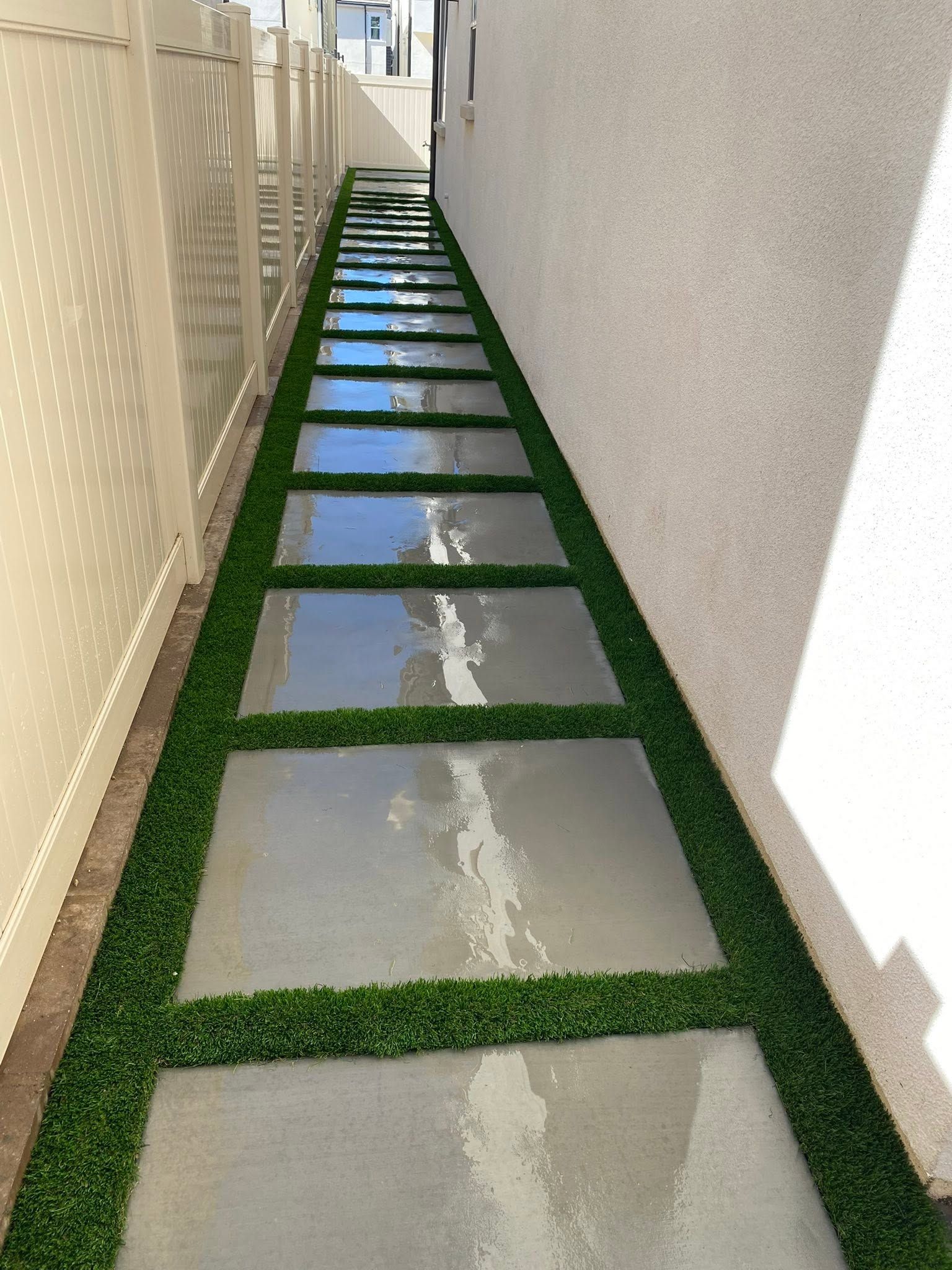
The Difference Between Settled Work and Shifting Surfaces
Hardscape durability is almost entirely determined by what happens below the visible surface. The compaction depth of the base material, the type of aggregate used, and the way drainage is managed under and around the installation all affect long-term stability. In South El Monte and the broader San Gabriel Valley, expansive soils that swell with moisture and contract during dry periods put lateral and vertical pressure on hardscape edges—this is why edge restraints on paver installations are installed at the perimeter and staked into the base rather than left unfastened. Without properly anchored restraints, paver fields creep outward over time, causing gaps and uneven surfaces at the center of the installation.
After a completed hardscape installation, the finished surface sits level across its entire span, joints between pavers are filled uniformly, and water moves toward drainage points rather than pooling at low spots. 4 Lakes Landscape grades drainage direction into the base preparation before any surface material is placed, so the drainage behavior of the finished surface is by design rather than incidental. Stone features read as visually cohesive, with consistent joint width and no visible shifting at the base where soil movement would first show up.
Material choices for hardscape projects affect both appearance and maintenance requirements. Natural stone varies in porosity and requires sealing in some applications to prevent staining; manufactured concrete pavers are more dimensionally consistent and available in a wider range of colors and profiles. The right choice depends on the use of the space, the desired aesthetic, and what maintenance the property owner is prepared to do over time.
What Property Owners Usually Ask
These questions come up most often when homeowners and commercial property owners in South El Monte are planning a hardscape installation for the first time or replacing work that has settled or deteriorated.
Why do pavers shift or become uneven after installation?
Shifting typically traces back to insufficient base compaction or inadequate edge restraint installation—without a properly compacted base, the setting bed moves under load, and without anchored restraints, the paver field spreads at the edges and loses level at the center.
How does Southern California's clay soil affect hardscape base preparation?
Expansive clay absorbs water and increases in volume, then contracts as it dries—this cycle applies pressure to hardscape bases, which is why base depth and drainage management are more critical here than in regions with stable, sandy soils.
What is the difference between natural stone and concrete pavers for a patio?
Natural stone offers unique color variation and texture but is less dimensionally consistent and more porous than manufactured concrete pavers, which are produced to uniform tolerances and available in controlled color ranges—both perform well when properly installed over an adequate base.
How is drainage handled under a paver patio?
The aggregate base is graded to direct water away from structures before the setting bed and pavers are placed, and permeable joint sand allows some water to pass through the surface into the base—proper drainage design prevents water from accumulating under the installation where it would accelerate base movement.
When does a hardscape project require a retaining structure rather than a flat surface?
Slopes or grade changes above roughly one foot across a short horizontal distance typically need a retaining wall or step system to hold soil and create level surface area—installing flat paving on an unretained slope leads to slippage and base failure over time.
4 Lakes Landscape approaches every hardscape project with base preparation as the primary investment, because surface materials perform only as well as what supports them. Call (626) 202-3211 to arrange a site visit and walk through the options for your outdoor space.