
Concrete Surfaces Built for Lasting Use
Concrete Services in South El Monte for driveways, patios, and outdoor surfaces showing cracking, settling, or surface deterioration
Concrete in Southern California faces a specific and underappreciated stress cycle: overnight temperatures drop, daytime heat climbs fast, and the ground beneath slabs shifts seasonally in clay-heavy soils common to the San Gabriel Valley. 4 Lakes Landscape installs concrete driveways, patios, and outdoor surfaces in South El Monte with that ground behavior factored into every pour. Property owners dealing with cracked flatwork, sunken sections, or surfaces that have started to scale after years of UV exposure are the ones who most often need this work done.
Concrete installation begins well before the mix is poured. Sub-base preparation determines whether a slab holds its shape over time or develops low spots and cracks within a few seasons. For driveways and outdoor surfaces in this region, that typically means compacting a stable aggregate base and accounting for drainage direction so standing water does not pool against structures or create freeze-thaw pressure—even in a climate that rarely freezes, temperature swings and heavy rain events are enough to work water under improperly graded slabs. Patio installations involve additional decisions around finish texture, which affects both slip resistance and how the surface handles heat reflection in direct sun.
Request a site visit to review your current surface condition and discuss the right concrete specification for your driveway or patio project..
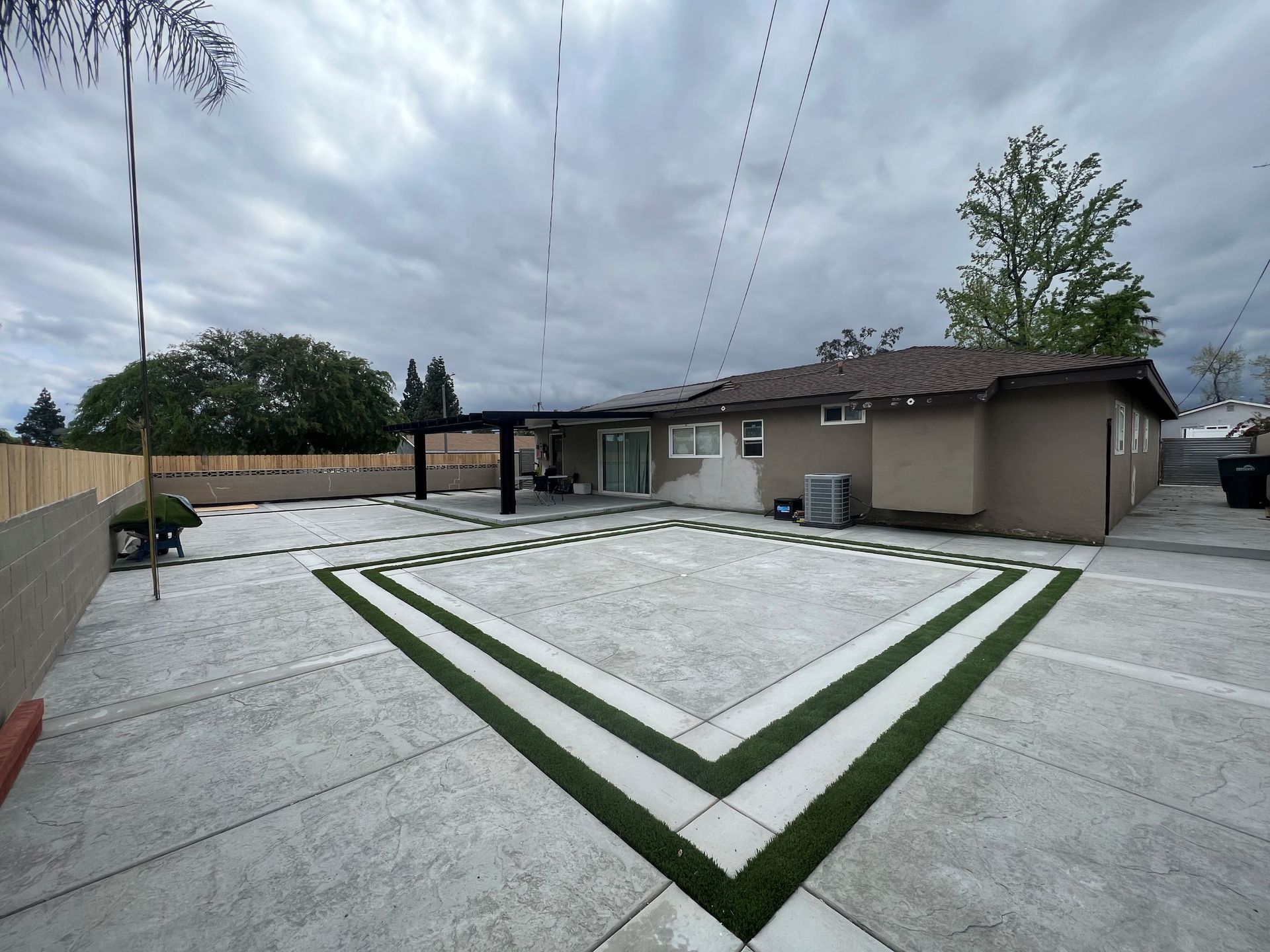
What Proper Concrete Installation Requires
The visible surface of a concrete slab tells only part of the story. Below grade, the compaction depth, base material type, and moisture barrier placement all determine how the finished slab performs under traffic load and seasonal ground movement. Reinforcement decisions—whether wire mesh, rebar, or fiber additives are appropriate—depend on the intended use of the surface, the thickness of the pour, and what's underneath. These are not one-size-fits-all choices, and skipping the evaluation step is how concrete ends up cracking at the edges within the first few years.
Once the concrete cures, the changes are straightforward to observe: edges are clean and defined, the surface drains in the intended direction, and there are no low spots where water collects. A properly finished driveway or patio also has consistent color and texture across the slab—not the patchwork appearance that shows up when finishing work is rushed before the concrete reaches the right stage of set. 4 Lakes Landscape approaches each pour with attention to timing and surface finishing to avoid those visible inconsistencies.
Concrete projects also vary in scope depending on whether existing slabs need removal first. Demolition and disposal of old concrete adds a step to the process and affects scheduling. Decorative options like broom finish, exposed aggregate, or stamped patterns are available for patio applications and change both the appearance and the surface texture underfoot..
Common Questions About Concrete Projects
These are the questions most property owners ask before starting a concrete driveway or patio installation in the South El Monte area.
What causes concrete driveways to crack near the edges first?
Edge cracking typically happens when the base material wasn't compacted adequately at the perimeter, leaving the slab unsupported where load and soil movement concentrate stress—reinforcement placed too close to the edge or too shallow also contributes.
How long does concrete need to cure before it can handle vehicle traffic?
Full strength develops over roughly 28 days, but most installations can handle foot traffic within 24 to 48 hours and light vehicle traffic after about a week, depending on mix design and weather conditions during the cure.
Why does concrete in Southern California sometimes show surface scaling or dusting?
High evaporation rates during warm, dry conditions pull moisture from the surface too quickly during finishing, which weakens the top layer—this is why timing the pour during cooler parts of the day matters in South El Monte's climate.
What's the difference between a broom finish and an exposed aggregate finish for a patio?
A broom finish creates fine texture lines that improve traction without affecting drainage, while exposed aggregate removes the cream layer to reveal the stone within the mix, giving a more textured appearance that holds up well to heavy outdoor use.
How does drainage slope affect a concrete patio installation?
A minimum slope away from the structure—typically around one to two percent—prevents water from sitting on the surface and working under the slab over time, which is a common cause of cracking and settling on flat or improperly graded patios.
4 Lakes Landscape can walk through the specific conditions of your property before work begins to confirm the right approach for your driveway or patio. Call (626) 202-3211 to set up an on-site evaluation.