
Pavement That Holds Under Daily Load
Asphalt Services in South El Monte for driveways and surfaces showing rutting, cracking, or drainage failure
Rutted asphalt that collects water after rain, edges that have begun to crumble, or a driveway surface so oxidized it no longer sheds water the way it once did—these are the signs that point to needed asphalt work. 4 Lakes Landscape installs and repairs asphalt driveways and surfaces in South El Monte, working through the full process from base preparation through finished pavement. The San Gabriel Valley's combination of intense summer heat and periodic heavy rainfall creates specific stresses on asphalt that affect how installation and repair work should be approached.
Asphalt installation involves more than laying hot mix and compacting it. The structural base underneath—its depth, material type, and compaction level—determines whether the finished surface remains stable under vehicle loads or develops ruts and soft spots within a few seasons. In areas with expansive clay soils, which are common in this part of Los Angeles, base preparation becomes especially important because ground movement directly telegraphs up through the pavement. Asphalt repair work follows a different set of decisions: whether a section can be patched effectively or whether a full-depth repair is needed depends on how far deterioration has progressed beneath the visible surface.
Arrange an on-site assessment to determine whether your asphalt surface needs repair, partial replacement, or full installation.
How Asphalt Work Addresses Surface Deterioration
Asphalt degrades through a predictable sequence. UV exposure oxidizes the binder that holds the aggregate together, making the surface brittle. Water penetrates through cracks, softens the base, and accelerates structural failure from below. The repair approach for each stage looks different: early-stage oxidation with minor cracking responds to sealcoating and crack filling, while surfaces showing alligator cracking or significant depression need base repair before any overlay will hold. Diagnosing which stage the pavement has reached—and what's happening beneath it—is the decision point that separates durable repairs from temporary patches.
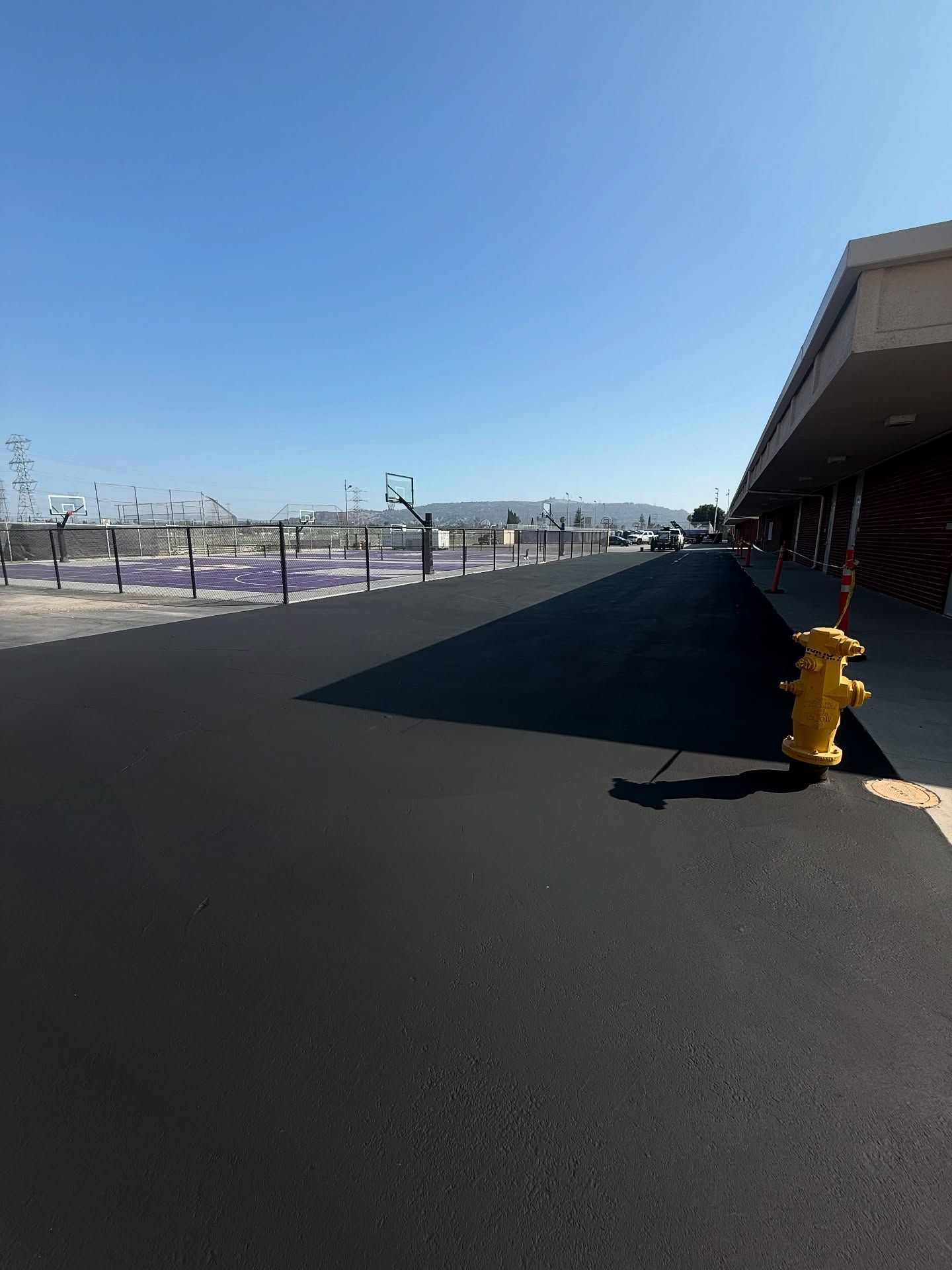
After a properly completed asphalt installation or repair, the surface drains uniformly without pooling, rides smoothly without the jarring transitions that mark patched areas done without depth correction, and presents a consistent dark color that indicates fresh binder throughout. 4 Lakes Landscape compacts the finished surface in multiple passes rather than a single pass to ensure uniform density, which affects how long the pavement resists rutting under repeated vehicle loads.
Asphalt projects vary based on whether existing pavement is removed or overlaid, the thickness of the new surface course, and the load requirements of the area being paved. Residential driveways and commercial lots have different thickness requirements because the vehicle weights and traffic frequency they handle differ significantly.
What Property Owners Usually Ask
These questions come up consistently when property owners in the South El Monte area are evaluating asphalt installation or repair for their driveways and surfaces.
Why does asphalt soften and rut in Southern California summers?
Asphalt binder is temperature-sensitive, and mixes not formulated for high-temperature climates can reach their softening point during peak summer heat—proper mix selection for the South El Monte climate accounts for this by using harder-grade binders.
How do you know whether a repair patch will hold or whether the whole section needs replacement?
Alligator cracking—the interconnected, scaly fracture pattern that resembles reptile skin—signals base failure rather than surface failure, meaning patches applied over it without base correction will re-crack quickly.
What is the difference between an asphalt overlay and a full-depth replacement?
An overlay places new asphalt over existing pavement when the base is still structurally sound, while full-depth replacement removes the existing material and rebuilds from the base up—the right choice depends on how much base integrity remains.
How soon can a newly paved driveway handle vehicle traffic?
New asphalt reaches sufficient hardness for regular vehicle use within 24 to 72 hours under typical conditions, though the binder continues to cure and harden for several weeks after installation.
When is the best time of year to schedule asphalt installation?
Warm, dry conditions are ideal for asphalt work, making late spring through early fall the preferred window in South El Monte, as the mix needs to stay workable during compaction and set correctly as it cools.
4 Lakes Landscape evaluates each asphalt project individually before recommending an installation or repair approach. Call (626) 202-3211 to schedule a property visit and get a detailed estimate based on your actual surface conditions.